




 Publication date: 05.02.2026
I am a certified UK tax and accounting professional who works daily with clients across various industries — small businesses, international entrepreneurs, and non-residents entering the UK market. My role is to help them navigate HMRC requirements, build effective tax strategies, and keep their businesses compliant, stable, and financially protected. My approach combines strong academic training, international experience, and a practical understanding of how UK taxation works in real business environments. Clients rely on me for Self Assessment, CT600, VAT, CIS, company formation, and long-term tax advisory. I focus on accuracy, transparency, and tailored solutions, because every business has its own structure, risks, and goals. I work with both UK-based clients and those operating internationally, providing the support they need to manage their obligations confidently within the UK tax system.
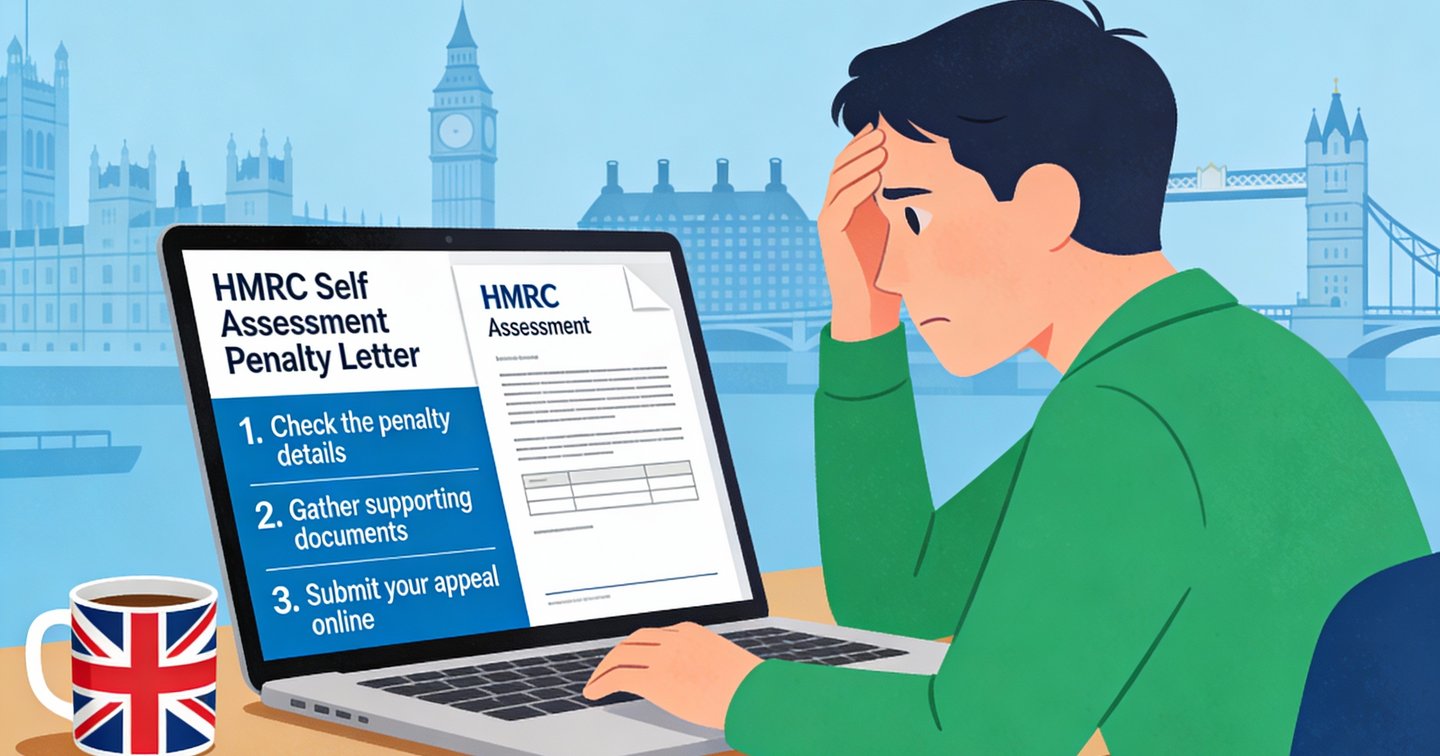
In 2026, a UK-based self-employed consultant approached me, accountant and tax advisor Iryna Shmulenko, with an urgent issue involving late Self Assessment submissions and unexpected HMRC penalties. The client had multiple income streams, including freelance earnings and overseas financial activity, which created confusion in reporting obligations. Due to missed deadlines and incomplete documentation, HMRC imposed penalties and the client faced escalating compliance risks.

Client's core challenges:
— Late submission of Self Assessment tax returns (SA100);
— Incorrect reporting of foreign income and residence status (SA109);
— Unexpected HMRC penalties and risk of further enforcement action;
— Lack of structured bookkeeping and expense documentation;
— Need for urgent tax compliance restoration and penalty appeal support.
Strategic Approach to Self Assessment Compliance and HMRC Penalty Resolution
My initial step was to conduct a full review of the client’s tax position, income structure, and HMRC correspondence. This comprehensive audit revealed that the previous filings lacked supplementary disclosures and did not properly reflect the client’s overseas income and residency considerations.
I developed a tailored tax strategy focusing on the following pillars:
- Preparing and correcting the Self Assessment return (SA100) with full supporting documentation.
- Completing the supplementary residence and remittance pages (SA109) to ensure accurate foreign income reporting.
- Drafting and submitting a structured HMRC penalty appeal with legal and factual justification.
- Organizing allowable expenses and deductions to minimize tax exposure.
- Implementing a compliance calendar to prevent future late filing penalties.
Implemented Solutions and Tax Measures
The implementation phase involved full preparation of corrected filings and direct communication with HMRC. I provided comprehensive support for:
- Submitting the revised SA100 tax return with accurate income classification.
- Completing SA109 disclosures for overseas income and residency compliance.
- Preparing supporting evidence for the client’s late filing circumstances.
- Filing a penalty appeal request and negotiating with HMRC officers.
- Advising the client on record-keeping practices and future tax planning.
Results and Benefits Realized
- Successfully reduced HMRC penalties through a structured appeal process.
- Restored full Self Assessment compliance within a short timeframe.
- Ensured correct reporting of foreign income, preventing future HMRC disputes.
- Optimized allowable deductions, reducing the client’s overall tax burden.
- Established a long-term compliance framework for future tax years.
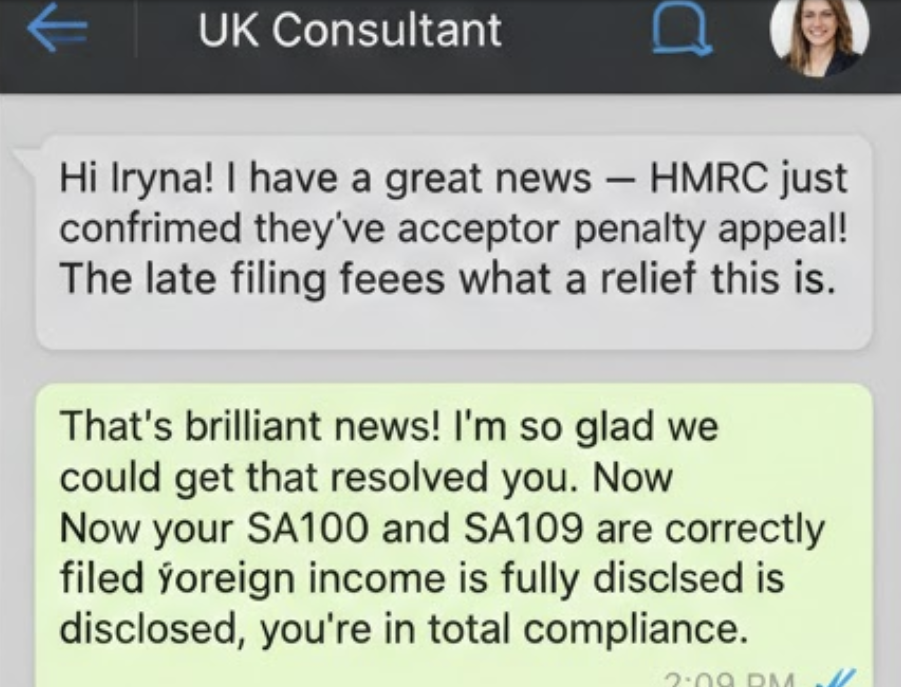
Client review
Frequently Asked Questions (FAQ)
Question
What is the purpose of SA109 in Self Assessment filings?
Answer
SA109 is used to report residency status and overseas income details, ensuring HMRC receives accurate disclosures for individuals with international financial activity.
Question
Can HMRC penalties be appealed successfully?
Answer
Yes, penalties can often be reduced or removed if a structured appeal is submitted with supporting evidence and proper justification for late filing circumstances.
Question
How can taxpayers avoid late filing issues in the future?
Answer
Implementing a compliance calendar, maintaining organized bookkeeping, and working with a professional tax advisor ensures timely submissions and reduces HMRC enforcement risks.
Thanks to professional Self Assessment preparation and structured HMRC penalty appeal support, the client successfully restored compliance, reduced penalties, and ensured accurate reporting of overseas income.
This case highlights the importance of expert tax advisory services in navigating complex UK Self Assessment requirements and avoiding unnecessary HMRC enforcement actions in 2026 and beyond.